Color Realism Tattoos in Fort Lauderdale
Photographic depth in full color — skin tones, light, and texture matched so the piece reads as a photograph, and chosen to hold that depth as it ages.
Apply for a session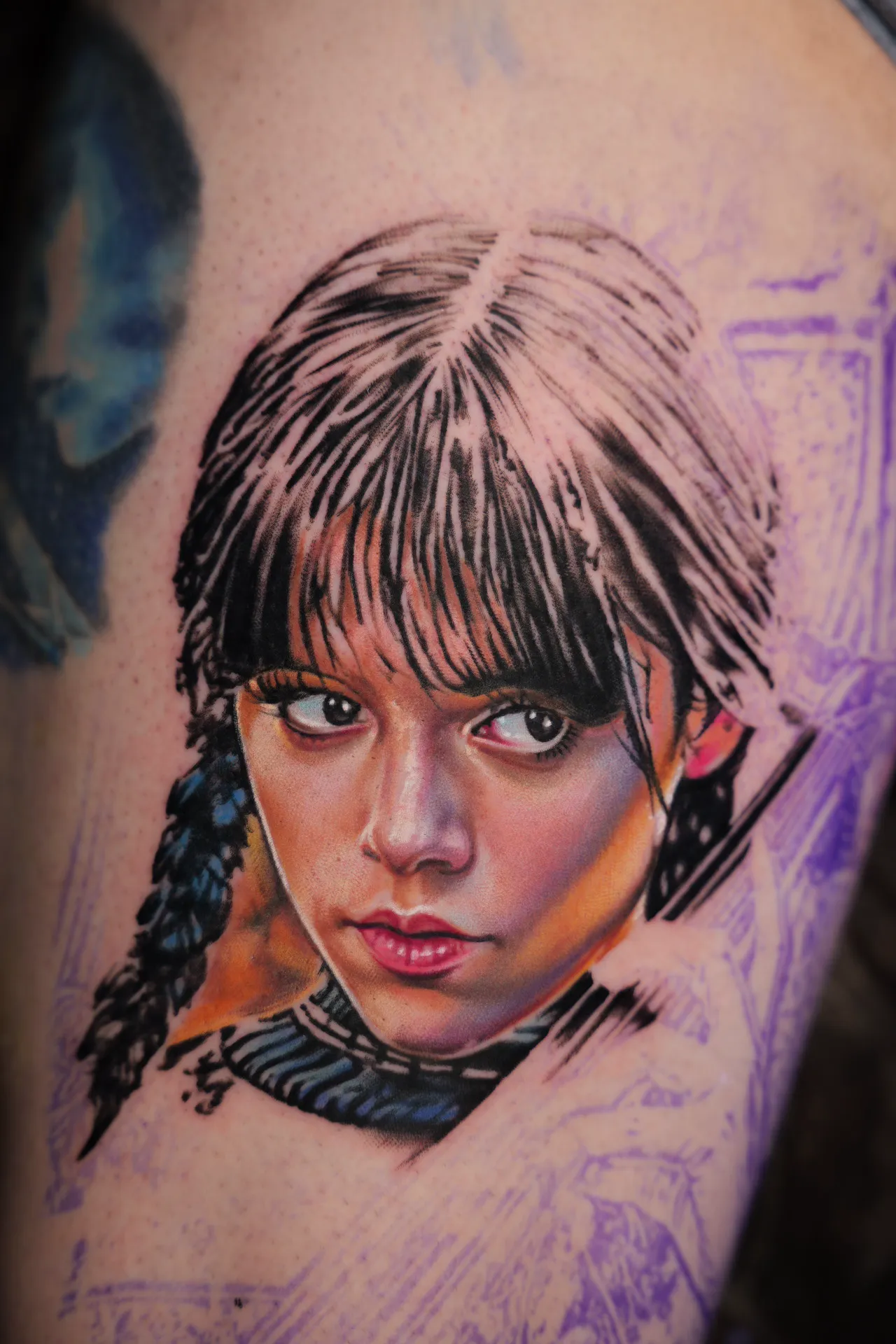
Color realism is the hardest version of an already hard style. On top of light, contrast, and anatomy, every hue has to be mixed and placed so it reads true on skin — and keeps reading true years later, through sunlight and healing.
Color that looks vivid on day one but muddies within two years isn't color realism — it's color that was never planned to age. The craft is choosing pigments and building depth so the piece stays photographic long after it heals.
01
What color realism actually is
Color realism reproduces a subject in full color with photographic accuracy — skin tones, foliage, reflections, and light all matched to how the eye actually sees them. It demands everything black and grey realism does, plus complete control of color temperature and saturation.
- Color mixed for skin, not from a bottle: tones are built to read correctly against your own skin's undertone.
- Depth through temperature and value, so the image has real dimension instead of flat, poster-like color.
- A palette planned for the long term — every hue chosen for how it will settle and hold, not just how it looks fresh.
02
How color realism ages — and color vs black & grey
The fair question about any color piece is how it will look in five or ten years. Color does behave differently than black and grey, and a good artist plans for that from the first session.
What keeps color realism true over time
- Pigments and saturation chosen for longevity, knowing some colors hold better than others.
- Depth carried by value, not just hue — so even as color softens slightly, the image keeps its dimension.
- Honest guidance on sun exposure, which fades color faster than anything else you control.
Color realism vs black & grey
Black and grey is the more forgiving choice for pure longevity — it's why it suits portraits and pieces you want dead sharp for decades. Color realism trades a little of that durability for a range black and grey can't reach: living skin tones, natural light, the exact color of a flower or an eye. Which one is right depends on the subject and how you want it to age — and that's a conversation, not a default.
03
What works best in color
Some subjects are made for color realism; others are stronger in black and grey. Part of the design process is being straight about which is which.
- Portraits where skin tone and warmth carry the likeness.
- Nature — flowers, feathers, animals — where color is the whole point.
- Objects and food with reflective color and surface detail.
If a subject would actually read stronger in black and grey, you'll hear that before you commit — the goal is the best piece, not the most ink.
04
Sessions, pricing, and long-term care
Color realism is billed by the day, like all realism here. Color is built in layers, so larger pieces tend to take more time than their black and grey equivalents.
| What to expect | |
|---|---|
| Sessions | Often more than one — color depth is built in layers |
| Rate | $1,200 per day · $200 deposit to reserve your date |
| Touch-ups | Some color pieces benefit from a touch-up over the years — normal, not a flaw |
| Long-term care | Sun protection is the single biggest factor in keeping color true |
A larger color piece may total more than a black and grey one — not because the rate changes, but because layered color takes longer to build correctly.
Common questions
- Does color realism fade over time?
- All tattoos soften with age, and color does it a little faster than black and grey — mostly from sun exposure. Well-chosen pigments, depth built through value, and honest aftercare keep a color realism piece reading true for many years. Sun protection is the single biggest factor you control.
- Is color realism more expensive than black and grey?
- The day rate is the same — $1,200 per day. Color realism can take more sessions because color is built in layers, so a larger color piece may total more simply because it takes longer, not because the rate changes.
- Does color realism work on darker skin tones?
- Yes. Color choices and contrast are adapted to your skin's undertone so the piece reads correctly. Hector plans the palette around your skin, not a generic reference.
- Will a color realism tattoo need touch-ups?
- Some color pieces benefit from a touch-up over the years as they settle, especially in high-sun placements. That is normal for color realism and something to plan for, not a sign of poor work.
Considering a color realism piece?
See the work, then apply. Hector reviews each project personally and takes on a limited number of commissions — there's no pressure to book, only to choose well.