Will it age well? How realism holds up over time
Realism lives on contrast, and contrast softens with age. Here's what actually changes over the years, how black & grey and color differ, and what keeps a piece reading like a photograph for decades.
- Written by
- Hector Rodriguez Goderich
- Last updated
- Read time
- 6 min


01
What actually changes over time
Every tattoo softens as it ages. Ink settles deeper, fine lines spread a little, and contrast eases. Realism lives or dies on that contrast — so how a piece is built decides whether it still reads as a photograph in ten years, or fades to a grey smudge. The goal isn't to stop ageing. It's to build the piece so that as it softens, it softens gracefully.
02
Black & grey vs. color over the years
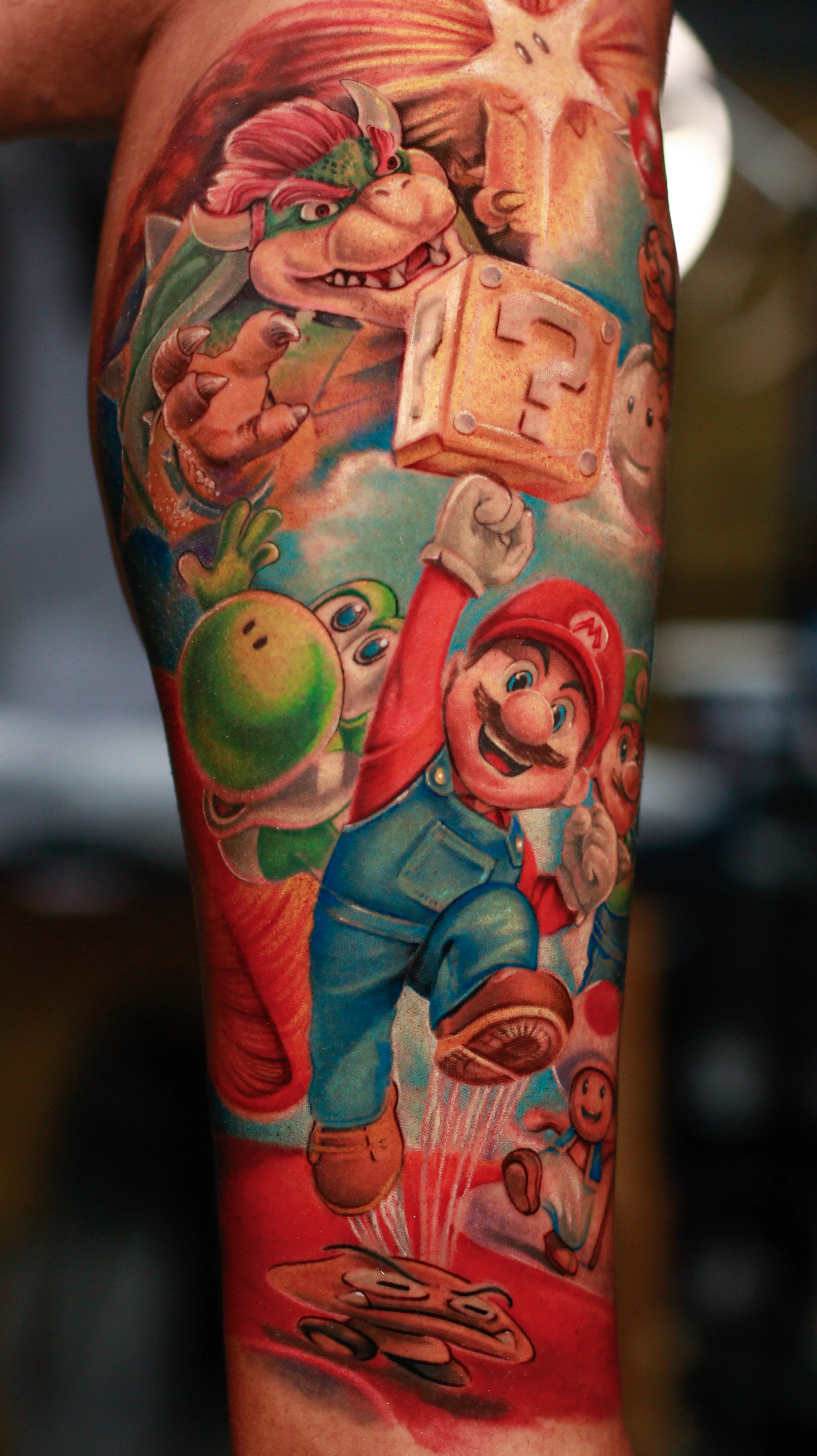
Black and grey generally ages more predictably than color. Color realism can be more striking, but it is less forgiving over time — some pigments fade faster and hues can shift, so it demands stricter sun protection and more upkeep.
| Black & grey | Color realism | |
|---|---|---|
| Ageing | Predictable — grey wash and black hold their character with real range | Less forgiving — some pigments fade or shift faster than others |
| Main threat | UV flattening the contrast that gives depth | UV fading pigment and shifting hues |
| Upkeep | Occasional small touch-ups keep it crisp | More disciplined sun protection and maintenance |
| Best for | Most realism subjects and placements | Pieces where the color payoff is worth the extra care |
03
Why depth is what keeps it readable
A realism piece with a full range of value — true blacks, clean highlights, and controlled greys between them — has somewhere to go as it softens. A flat piece, where everything sits at one value, has no reserve. When it eases, there's nothing left to read. This is why the artist's control of depth at the moment of tattooing is the single biggest factor in how the piece looks decades later.
Density matters too. Black packed too hard looks powerful on day one and blurs into a solid mass over the years. Restraint is what ages well.
04
Placement decides longevity
Where a piece goes changes how it holds up as much as how it's made.
- High-friction, high-stretch areas (hands, feet, inner arms) age faster and blur sooner.
- Sun-exposed placements need lifelong protection to keep contrast intact.
- Flatter, more stable areas hold fine detail longer — worth considering for intricate realism.
05
What keeps a piece sharp for life
Once healed, a few habits do most of the work of keeping realism looking the way it was drawn.
- Use SPF 30+ on the tattoo any time it’s in the sun — for life, not just while it heals.
- Keep the skin moisturized; hydrated skin holds linework and contrast crisper for longer.
- Look after your skin in general — the tattoo ages with it.
- Book the occasional small touch-up for black & grey when contrast starts to ease.
For the full healing routine that sets a piece up to age well from day one, see the aftercare guide.
Common questions
- Do realism tattoos age well?
- They can, if they’re built with a full range of value and protected from the sun. Realism that has true blacks, clean highlights, and controlled greys ages gracefully as it softens. Flat, single-value work and over-packed black are what blur and grey out over time.
- Does black & grey or color realism last longer?
- Black & grey generally ages more predictably and forgivingly. Color realism can be striking but is less forgiving — some pigments fade faster and hues can shift, so it demands even more disciplined sun protection and maintenance.
- How do I keep a realism tattoo looking sharp?
- Protect it from the sun with SPF 30+ for life, keep the skin moisturized, care for your skin generally, and book occasional small touch-ups for black & grey work when contrast begins to ease. Sun protection is the single most important habit.
Choosing an artist for a realism piece?
See the work, then apply. Hector reviews each project personally and takes on a limited number of commissions — there's no pressure to book, only to choose well.