How to choose a realism tattoo artist
Realism is the hardest tattoo style to do well and the easiest to do badly. Here is how to read a portfolio honestly, spot work that will age, and pick the right artist for a piece you'll wear for life.
- Written by
- Hector Rodriguez Goderich
- Last updated
- Read time
- 6 min
01
Read the portfolio, not the highlight reel
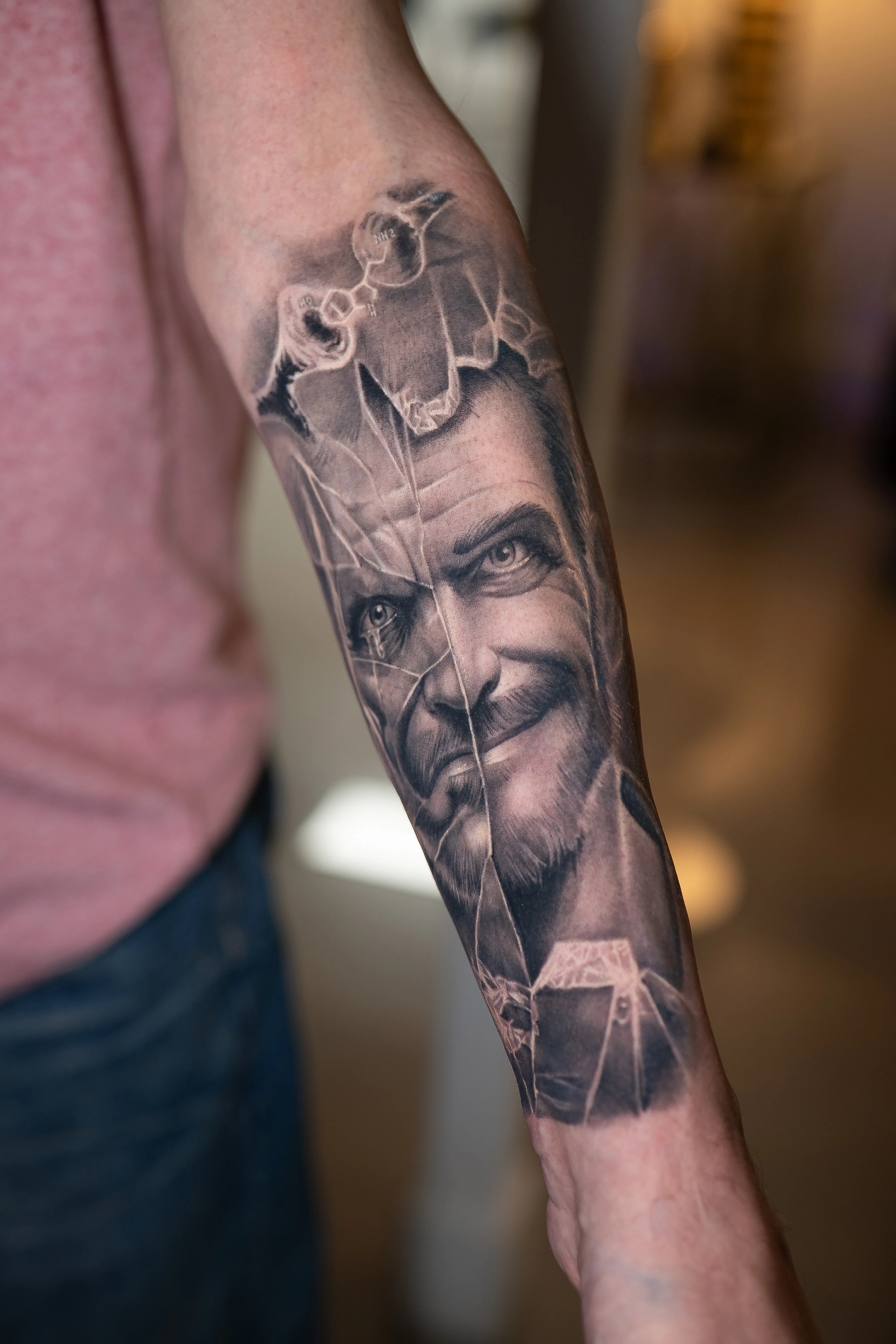
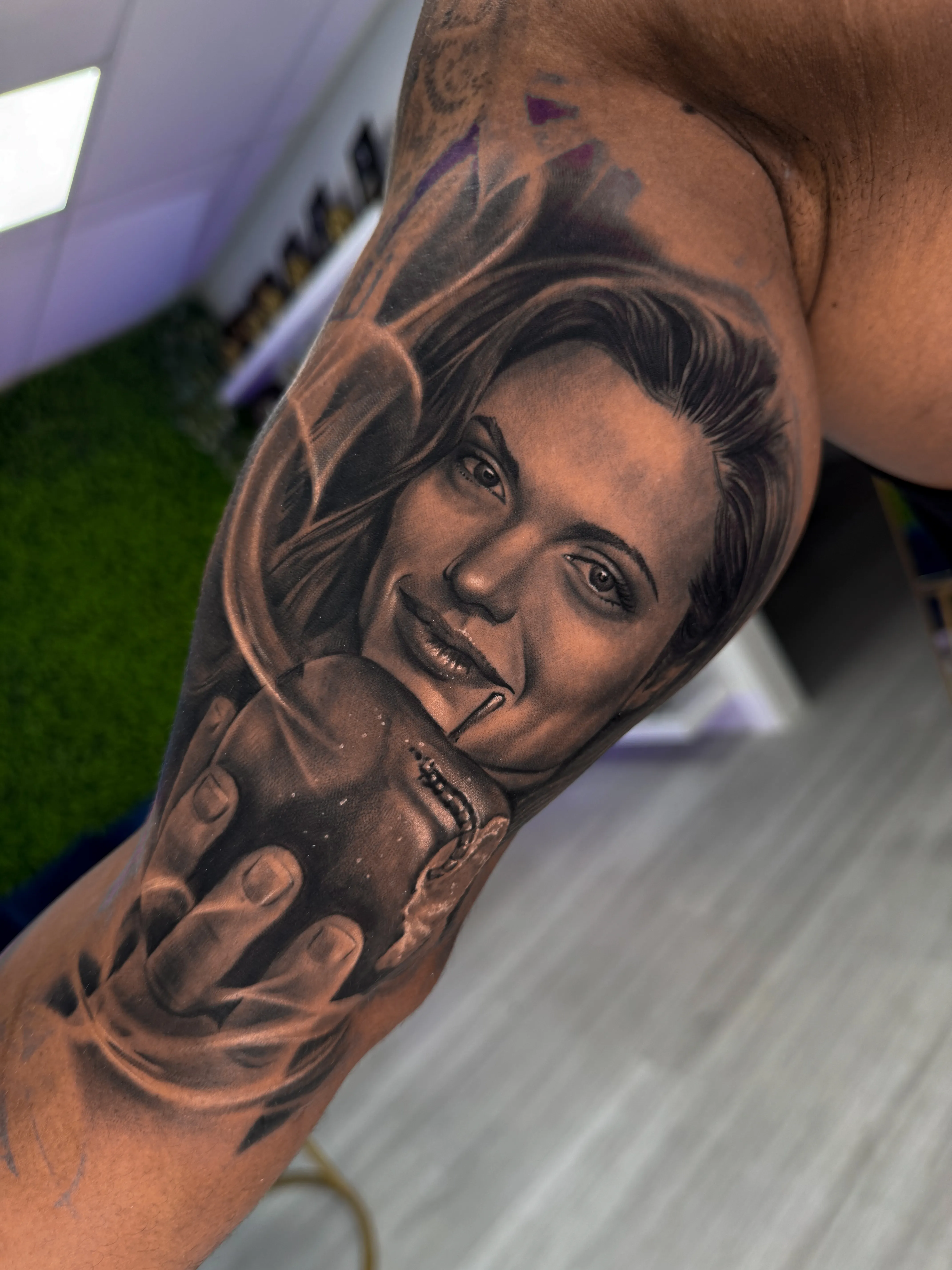
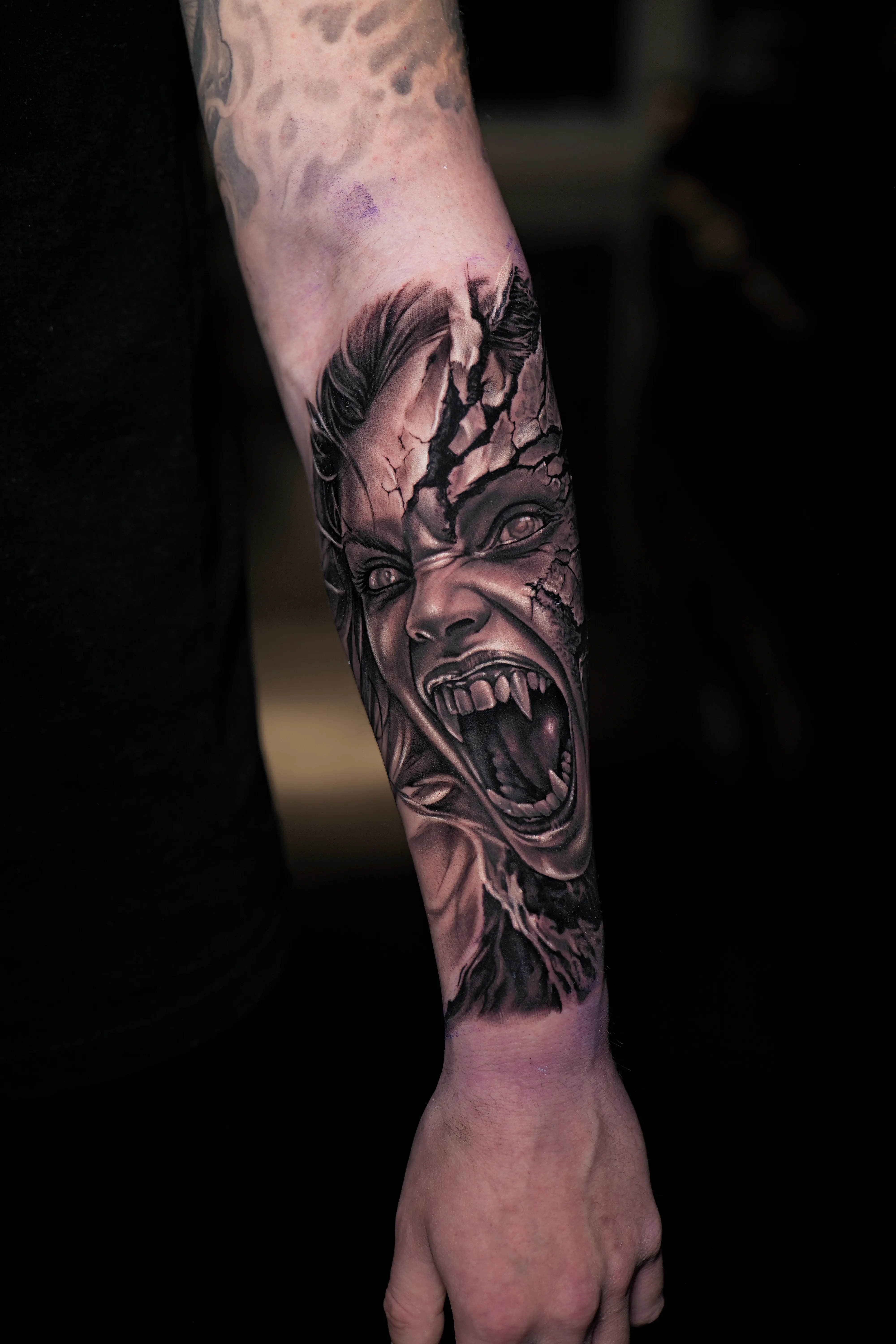
Anyone can post their three best photos. What tells you whether an artist can actually do realism is consistency across dozens of pieces — and whether those pieces were shot honestly. When you look at a realism portfolio, you're not judging the tattoo. You're judging whether the artist controls light, contrast, and skin depth well enough to make ink read as a photograph.
- Look for healed work, not just fresh work. A fresh tattoo is high-contrast and glossy — anyone looks good on day one. Healed photos, weeks or months later, show what the skin actually kept.
- Watch for even, natural lighting in the photos. Harsh studio flash and heavy editing hide soft transitions and blown-out highlights.
- Scan for consistency. Five great portraits mean more than one great portrait surrounded by flat, muddy pieces.
- Notice range within realism — portraits, textures, animals, objects. Depth control that holds across subjects is skill, not luck.
02
Know what separates realism that lasts
Realism is unforgiving. A misread skin depth or a drifted proportion doesn't just look off today — it shows forever, and it gets worse as the tattoo settles and ages.
Signs of realism that will hold up
- Clean contrast: true blacks, real highlights, and a full range of greys in between — not a flat mid-grey wash.
- Controlled soft transitions (the gradient from shadow to light) with no hard banding.
- Correct proportion and anatomy, especially in faces, where the eye catches millimetre errors.
Red flags that age poorly
- Everything sitting at the same value — no depth, so the image flattens as it heals.
- Over-saturated black packed too densely, which blurs and spreads over the years.
- Shaky or uncertain linework in the fine detail, a sign the artist is working past their control.
03
Choose a specialist, not a generalist
A shop that does traditional, lettering, color, and "also realism" is rarely the place for a realism piece. Realism is a discipline of its own — it rewards artists who do it almost exclusively, for years. The question isn't "can this artist tattoo?" It's "does this artist spend their week solving the exact problem my piece needs solved?"
Seventeen years focused on photo and micro realism is not the same as seventeen years of tattooing with realism as one option on the menu. Specialization is the single strongest predictor of a result that still looks like a photograph a decade later.
04
What to ask before you book
A good realism artist will welcome these questions. Vague or defensive answers are information too.
- Can I see healed photos of work similar to what I want?
- How do you approach placement and how the piece will age with my skin?
- What reference photos do you need from me, and what makes a good one?
- How many sessions will this take, and how is the work priced?
- What does aftercare look like, and do you handle touch-ups?
05
Bring the artist a real chance to succeed
Even the best artist can't rescue a poor reference. High-resolution photos, clear and even lighting, and multiple angles for portraits give the artist the information they need to translate depth onto skin. Choosing well is half your job. Giving the artist strong material is the other half.
Common questions
- How can I tell if a realism tattoo will age well?
- Look at the artist’s healed work, not fresh photos. Well-aged realism keeps a full range of value — true blacks, real highlights, and clean greys between them — with soft transitions and correct proportion. Flat, single-value work and over-packed black are the pieces that blur and lose depth over the years.
- Should I choose a realism specialist or a general tattoo artist?
- For a realism piece, choose a specialist. Realism is a discipline of its own that rewards artists who do it almost exclusively for years. A generalist who lists realism as one style among many rarely has the concentrated depth-control it demands.
- What reference photos should I bring to a realism artist?
- Bring high-resolution photos with clear, even lighting. For portraits, multiple angles are ideal. The sharper and more detailed your reference, the more precisely each texture, shadow, and highlight can be reproduced on skin.
Choosing an artist for a realism piece?
See the work, then apply. Hector reviews each project personally and takes on a limited number of commissions — there's no pressure to book, only to choose well.