What realism tattoos actually cost — and why
Realism is priced differently from other tattoo work, and for good reason. Here's how day-rate pricing works, what you're really paying for, and why the lowest price is usually the most expensive choice.
- Written by
- Hector Rodriguez Goderich
- Last updated
- Read time
- 5 min
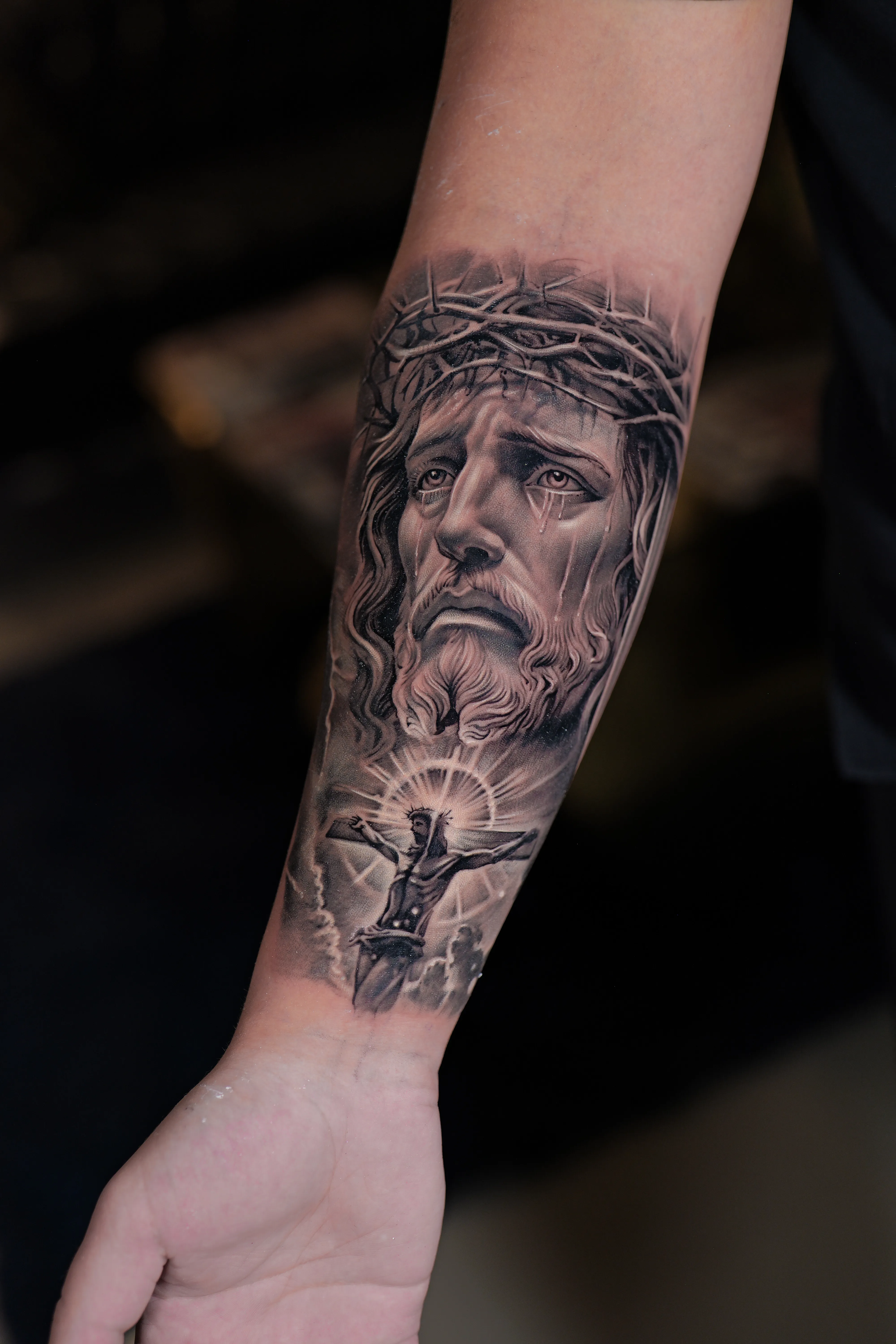
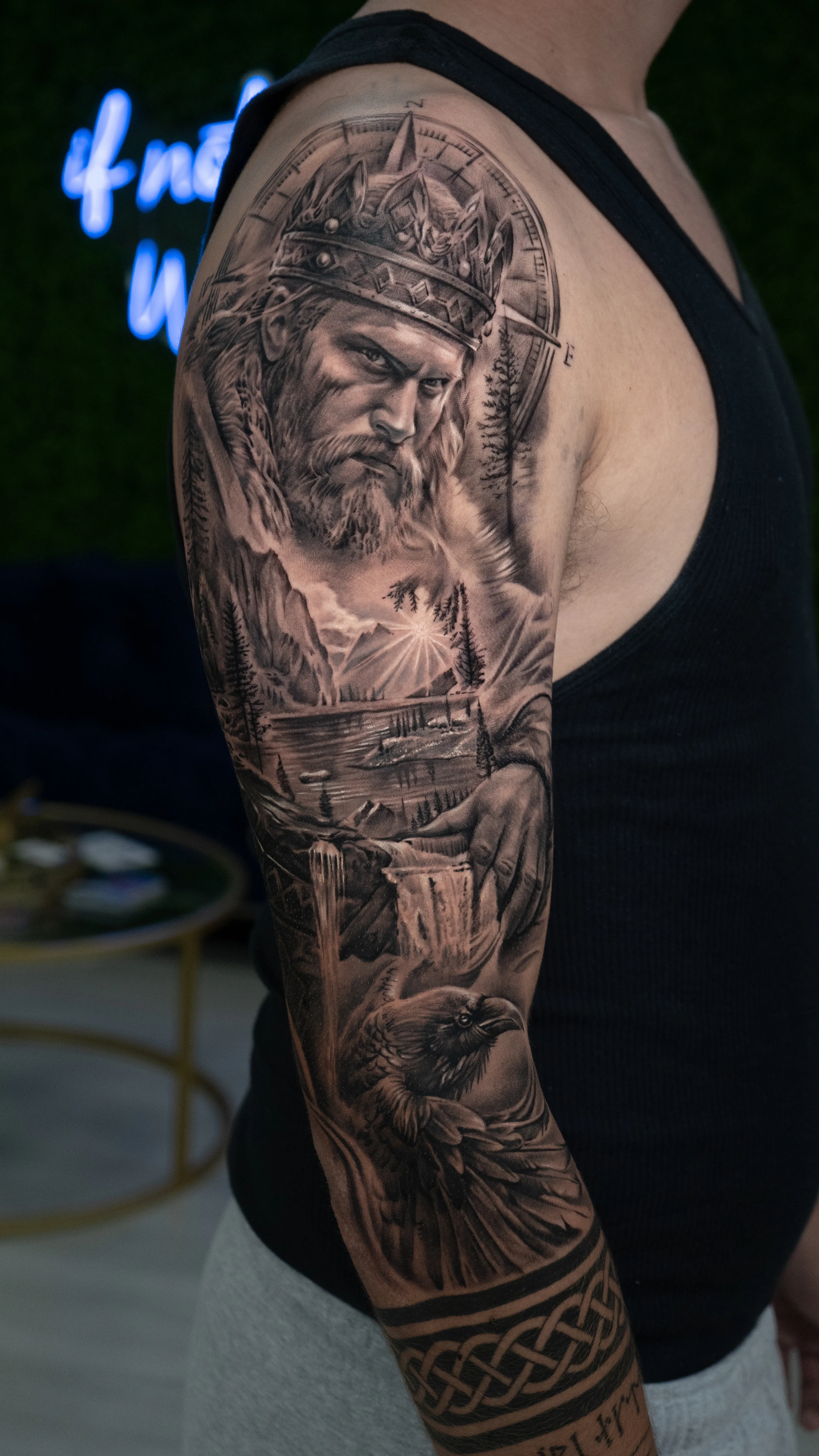
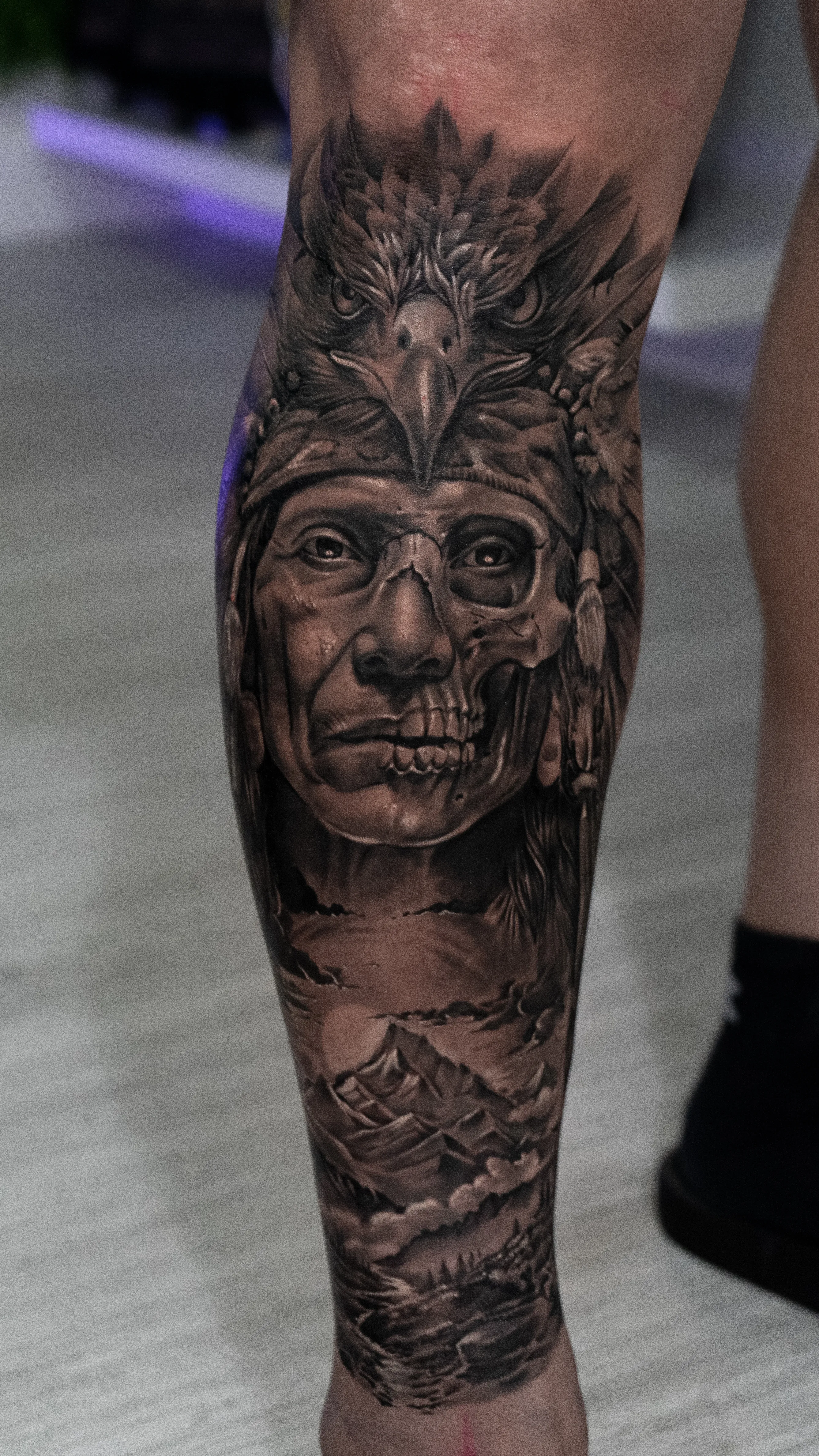
01
Why realism is priced by the day
Realism isn't priced like a flash tattoo because it isn't made like one. A serious piece is built over full sessions — laying value, holding contrast, and letting the skin cooperate. Rushing any of it shows. A day rate reflects that reality: you're booking an artist's full focus for a block of time, not buying a design off a wall. At TKO, a full session runs $1,200 for roughly six to seven hours of work, with a $200 deposit to hold the date.
A flat day rate also protects you. It removes the incentive to rush, because the artist isn't paid more for finishing faster — they're paid to get it right.
02
What a session actually includes
The needle time is the visible part. Most of what you're paying for happens before and around it.
- Consultation and project review — deciding whether the piece can be done well on your skin, at that size, in that placement.
- Reference work and drawing — translating a photo into something that will read as realism on a curved, living surface.
- The session itself — full hours of focused, uninterrupted work.
- Aftercare guidance and, for black & grey, the occasional small touch-up over the years.
03
Why under-priced realism costs the most
Realism is the style where a bargain costs the most. When it's done poorly, it doesn't just look slightly off — it flattens, blurs, and greys out as it heals and ages, and there's no easy way back.
What getting it wrong actually costs
- Laser removal of a failed realism piece typically runs $500–$3,000 per session, over multiple sessions.
- A cover-up of dense, muddy black realism is one of the hardest jobs in tattooing — and often not fully possible.
- The time cost is worse than the money: you wear the mistake while you save up to undo it.
You're not paying for a tattoo. You're paying for the years of technical mastery that make the difference between a piece that reads as a photograph and one you pay again to remove.
04
How to judge value, not just price
The right question isn't "what's the least I can pay?" It's "what does it cost to have this done right, once?"
- Compare healed results, not hourly rates. A lower rate on work that ages badly is not a saving.
- Factor in the whole project — number of sessions, touch-ups, and whether the artist stands behind the piece.
- Weigh permanence. This is on your skin for life; price it like the long-term decision it is.
Common questions
- How much does a realism tattoo cost?
- At TKO Tattoo, realism is priced at a flat day rate of $1,200 for a full session of roughly six to seven hours, with a $200 non-refundable deposit to secure the date. Larger pieces span multiple sessions. You’re investing in specialized mastery, not a walk-in shop rate.
- Why is realism more expensive than other tattoo styles?
- Realism is the most technically demanding style. It’s built over full sessions with careful control of value, contrast, and skin depth, and it can’t be rushed without showing. A day rate reflects booking an artist’s full focus rather than buying a pre-made design.
- Is it worth paying more for a realism tattoo?
- Yes — under-priced realism is the expensive option. Poorly done realism flattens and blurs as it ages, and removal runs $500–$3,000 per session over several sessions. Paying once for work done right almost always costs less than paying to undo work that wasn’t.
Choosing an artist for a realism piece?
See the work, then apply. Hector reviews each project personally and takes on a limited number of commissions — there's no pressure to book, only to choose well.